
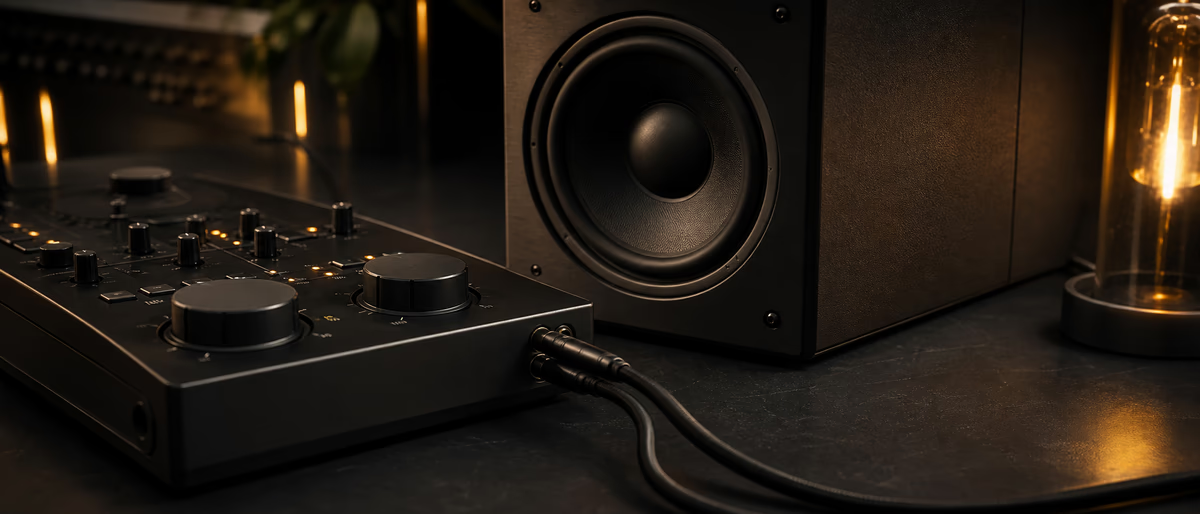
808 Sub Layers Designing Clean Low End for
त्वरित उत्तर
Get 808 Sub Layers Designing Clean Low End for right by defining the goal, using a simple checklist workflow, measuring results on real devices or campaigns, and avoiding one-size spam tactics. Specific steps below.
What 808 Sub Layers Designing Clean Low End for Really Requires
808 Sub Layers: Designing Clean Low End for Trap, Drill, and R&B fails when you chase tools before a clear outcome. Define the deliverable first: a cleaner mix, more email signups, a better live stream, or a faster session — then pick only the steps that move that metric.
Use this guide as a working checklist, not theory. Cross-check results on the same devices or channels your audience actually uses.
Step-by-Step Workflow
- 1. Set a single success metric
One number or audible target you can verify in under an hour. - 2. Prep assets and routing
Files named, buses labeled, links live, levels safe. - 3. Execute the core path
Do the minimum complete version before adding polish. - 4. QC on real conditions
Phones, mono, cheap earbuds, or live campaign stats — not only studio headphones. - 5. Document the preset
Save a template, checklist, or SOP so the next release is faster. - 6. Iterate once
Change one variable, measure again, then ship.
Key Decision Points
- Scope What is in v1 versus later polish.
- Tools Prefer reliable free/paid gear you already open cold.
- Time box Cap experiments so shipping still happens.
- Risk Rights, backups, and deliverability before public blasts.
- Handoff If others touch the project, write file and version rules.
Quick Reference
| Stage | Do | Avoid |
|---|---|---|
| Prep | Clear goal + named files | Random folder chaos |
| Build | One complete pass | Ten unfinished experiments |
| QC | Real-device / real-audience check | Solo-only decisions |
| Ship | Versioned bounce + CTA | Silent uploads with no link path |
| Learn | Note what moved the metric | Copying hype without numbers |
Common Mistakes
- Tool collecting New plugins will not replace a checklist.
- Skipping QC Studio lies; phones and stats do not.
- No CTA or next step Work without a path to fans or clients wastes reach.
- Overwriting versions Keep milestones — see project versioning habits.
Level up with verified free tools and sounds on Plugg Supply.
Learning path
संबंधित आंसर हब
शैली फ़ीड
फ़ीड से Trap सामग्री
लूप्स, वन-शॉट, प्रीसेट और कैटलॉग ड्रॉप्स जो Trap उत्पादन लेन से मेल खाते हैं।
![Big Citi Loops Drill Symphony [WAV]](/images/posts/big-citi-loops-drill-symphony-83755.avif?v=2026080101)
![Relooped RIOT Opium Trap Collection [WAV, MiDi, Synth Presets]](/images/posts/relooped-riot-opium-trap-collection-86059.avif?v=2026080101)
सैंपल / प्रीसेट / MIDI
Relooped RIOT Opium Trap Collection [WAV, MiDi, Synth Presets]
![Soloxprod Infrared Soundkit [WAV, MiDi, Synth Presets]](/images/posts/soloxprod-infrared-soundkit-86076.avif?v=2026080101)
सैंपल / प्रीसेट / MIDI
Soloxprod Infrared Soundkit [WAV, MiDi, Synth Presets]
![R8 Roots Drum Kit [WAV]](/images/posts/r8-roots-drum-kit-86079.avif?v=2026080101)
सैंपल
R8 Roots Drum Kit [WAV]
अक्सर पूछे जाने वाले प्रश्न
- What is the fastest way to improve 808 Sub Layers Designing Clean Low End for?
- Pick one metric, run the checklist workflow once end-to-end, QC on real conditions, then change a single variable.
- Do I need expensive tools for 808 Sub Layers Designing Clean Low End for?
- Usually no. Reliable free or gear you already know beats unused premium stacks.
- How do I know it is working?
- Compare before/after on the same metric: louder clarity on phones, higher click rate, fewer revisions, or faster session start times.
- How often should I revisit this system?
- After every release or client cycle. Update the template when the same mistake repeats twice.
- What should I do if results stall?
- Shrink scope, fix QC gaps, and remove steps that do not move the metric.
- Where does this fit in a weekly schedule?
- Block one focused session for the core path and a shorter slot for QC and documentation.