
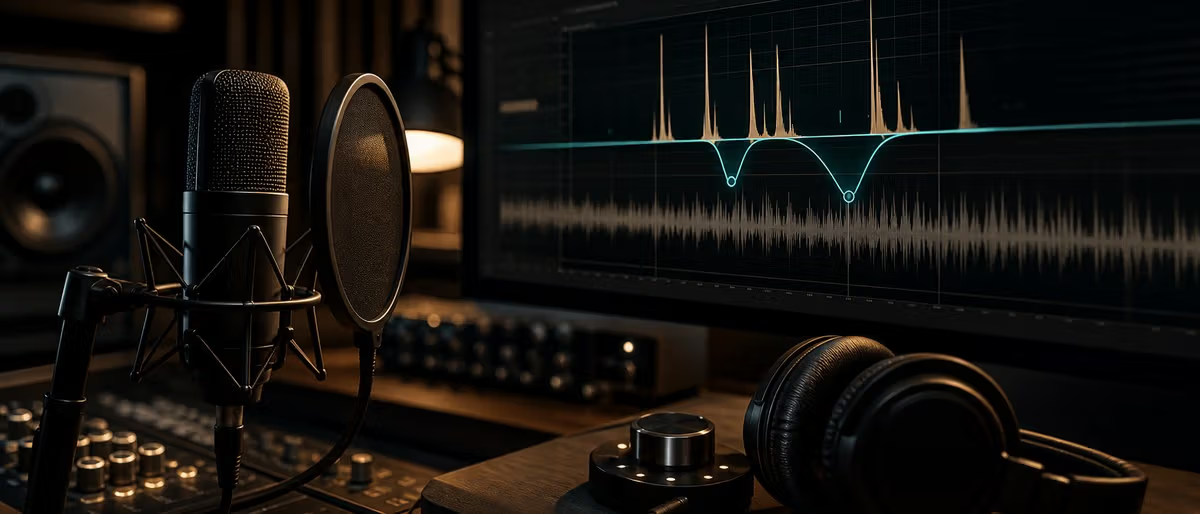
Comparison
| Method | Precision | Speed | Natural ध्वनि | Best For |
|---|---|---|---|---|
| समर्पित डी-एसर | Medium | Fast | Good | General वोकल de-essing |
| Multi-Band कंप्रेसर | High | Medium | Very good | Detailed नियंत्रण |
| Dynamic EQ | Very high | Medium | Excellent | सर्जिकल correction |
| Manual Clip Gain | Maximum | Slow | Most natural | समस्या spots |
| Hardware डी-एसर | Medium | Fast | Good | ट्रैकिंग stage |
Step-by-Step Guide
- Use a spectrum analyzer or the डी-एसर's listen function to find the समस्या फ़्रीक्वेंसी (usually 4-10 kHz).
- Set the डी-एसर to लक्ष्य the identified फ़्रीक्वेंसी. Start with a medium bandwidth (Q).
- Lower the threshold until the डी-एसर activates on sibilant passages. Set range to 3-6 dB of reduction.
- Play the वोकल in the full mix. The डी-एसर should be transparent — you shouldn't hear it working.
- If the वोकल sounds dull, raise the फ़्रीक्वेंसी or reduce the range. If सिबिलेंस remains, lower the threshold.
- Bypass the डी-एसर periodically. The वोकल should ध्वनि brighter and clearer with it engaged, not dull or lisping.
ब्राउज़ पेशेवर डी-एसर प्लगइन and वोकल प्रोसेसिंग tools for clean, सिबिलेंस-free mixes.
मुफ़्त डाउनलोड देखेंLearning path
Related answer hubs
Vocal Recording and MixingVocal recording and mixing: a home studio workflow for clear vocals.A clear home vocal starts before mixing: choose a quiet space, place the mic correctly, use a pop filter, avoid clipping, and record several takes. In the mix, clean noise, EQ mud and harshness, compress for consisten...Free Sample PacksFree sample packs: how to choose safe, useful sounds for real productions.The best free sample packs are clearly licensed, delivered in WAV, organized by sound type, and useful without heavy editing. Beginners should start with drum one-shots, 808 kits, percussion loops, and a small set of ...
अक्सर पूछे जाने वाले प्रश्न
- What फ़्रीक्वेंसी should I set my डी-एसर to?
- Most सिबिलेंस occurs between 4-10 kHz. Female वोकल often sibilate higher (6-10 kHz), while male वोकल are lower (4-7 kHz). Use the listen/सोलो function on your डी-एसर to find the exact फ़्रीक्वेंसी.
- Can I डी-एस too much?
- Yes. Over-de-essing creates a lisping effect where 'S' sounds become 'Sh' or disappear entirely. If the vocalist sounds like they have a speech impediment, you've de-essed too much. Aim for 3-6 dB of reduction maximum.
- Should I डी-एस before or after compression?
- डी-एस after compression. कंप्रेसर raise the level of quiet passages, which can exaggerate सिबिलेंस. If you डी-एस before compression, the कंप्रेसर may bring the सिबिलेंस back up. The standard chain is: EQ → कंप्रेसर → डी-एसर.
- Can I use EQ instead of a डी-एसर?
- Static EQ cuts सिबिलेंस but also dulls the entire वोकल. A डी-एसर only activates when सिबिलेंस occurs, preserving brightness during non-sibilant passages. डायनामिक EQ offers a middle ग्राउंड — it cuts only when the फ़्रीक्वेंसी is excessive.
- मेरी डी-एसर make the वोकल ध्वनि dull?
- Three causes: the फ़्रीक्वेंसी is set too लो (cutting important highs), the range is too aggressive (too much reduction), or the bandwidth is too wide (affecting non-sibilant frequencies). Raise the फ़्रीक्वेंसी, reduce the range, and narrow the Q.
- Do I need to डी-एस backing वोकल?
- Usually less than lead वोकल. Backing वोकल sit lower in the mix, so सिबिलेंस is less noticeable. Apply light de-essing (1-3 dB) if needed, or bus them together and डी-एस the group.