
मुख्य कंटेंट पर जाएँ

How to Record Vocals at Home Studio 2026: Complete Guide (2026)

Learn how to record high quality vocals at home with this complete guide. Covering microphone selection, preamp gain staging, pop filter placement, booth treatment, and recording techniques for clean, professional vocal takes.

How to Record Vocals at Home Studio 2026: Complete Guide (2026)

What Equipment Do You Need to Record वोकल at Home?

कंडेंसर vs. डायनामिक Microphone for वोकल: Which Is Better for Home Studios?

How to Set Up Your वोकल रिकॉर्डिंग Chain: Mic to इंटरफ़ेस to DAW

Pop Filter प्लेसमेंट and Microphone Technique: Distance and Angle

How to इसे Your Room for वोकल रिकॉर्डिंग on a बजट

रिकॉर्डिंग Techniques: How to Capture a Great वोकल Take

Common वोकल रिकॉर्डिंग गलतियाँ and How to Avoid Them

Microphone Types for वोकल रिकॉर्डिंग

Microphone TypePower RequiredCharacteristicsBest ForExamples
कंडेंसर Microphone48V phantom power requiredMost sensitive, widest फ़्रीक्वेंसी responseस्टूडियो रिकॉर्डिंग, controlled environmentsBlue Yeti, Audio-Technica AT2020, Rode NT1
डायनामिक MicrophoneNo phantom power neededRugged, handles loud sourcesअनुपचारित rooms, loud singers, rap वोकलShure SM7B, Shure Beta 58A, Rode PodMic
USB MicrophoneDirect to computer, no इंटरफ़ेसConvenient, less नियंत्रण over gainशुरुआती, podcasters, त्वरित रिकॉर्डिंगAudio-Technica AT2020USB+, Blue Yeti X, Rode NT-USB Mini
Lavalier/Clip MicWorn on bodyDiscreet, consistent distanceवीडियो production, on-camera talentRode Lavalier II, DPA 6060

Step-by-Step वोकल रिकॉर्डिंग Chain सेटअप

  1. Set up your microphone on a boom arm or stand at mouth height, 6-12 inches से your lips: 1 Attach your microphone to a boom arm or sturdy stand. Raise or lower it so the capsule is roughly at lip height when you are in your natural singing or speaking posture.
  2. इंस्टॉल the pop filter 2-3 inches in front of the microphone to prevent plosives: 2 Position the pop filter 2 to 3 inches से the microphone grille. P and B sounds create a burst of air that strikes the mic capsule सीधे; the pop filter deflects this air without affecting the वोकल tone.
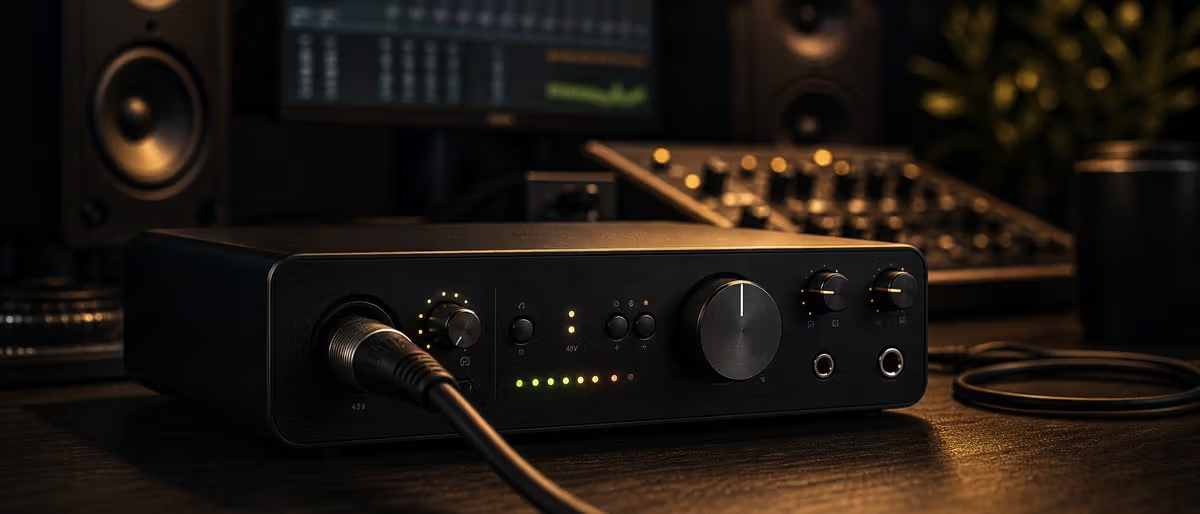
  3. Connect the microphone to your audio इंटरफ़ेस with an XLR केबल: 3 Use a balanced XLR केबल (not a 3.5mm or quarter-inch adapter) to connect your microphone to the XLR input on your इंटरफ़ेस. Balanced केबल reject interference and maintain सिग्नल integrity.
  4. Enable 48V phantom power on your इंटरफ़ेस if उपयोग a कंडेंसर microphone: 4 Press the 48V or phantom power button on your इंटरफ़ेस. This sends voltage to the कंडेंसर microphone through the XLR केबल, powering its internal amplifier.
  5. Set your preamp gain so the loudest part of the take peaks at -12 to -6 dB, no higher than -3 dB: 5 Speak or sing your loudest phrase at the same distance you will maintain during रिकॉर्डिंग. समायोजित gain until peaks sit in the -12 to -6 dB range. If you see -0 dB or clipping, reduce gain.
  6. मॉनिटर with closed-back स्टूडियो हेडफ़ोन to prevent headphone bleed: 6 Put on closed-back हेडफ़ोन. Keep volume at a comfortable level — loud enough to hear yourself clearly but not so loud that the headphone ड्राइवर vibrate into the microphone.
  7. Record a टेस्ट take and check for background noise, plosives, सिबिलेंस, and consistent distance: 7 Record 30 सेकंड of your intended performance. Listen back critically: do you hear room echo or background noise? Are P and B sounds cleanly filtered? समायोजित before रिकॉर्डिंग real takes.
  8. Do 3-5 full takes minimum; comp the best phrases से each into a final वोकल: 8 Perform the full song or section 3 to 5 times without stopping for minor गलतियाँ. After रिकॉर्डिंग, use your DAW to create a comp track by selecting the best phrase से each take and assembling them into a single, cohesive performance.

Learning path

Related answer hubs

Need a fresh वोकल प्रीसेट chain for your DAW?

मुफ़्त डाउनलोड देखें

अक्सर Asked प्रश्न About रिकॉर्डिंग वोकल at Home

What microphone do YouTubers and podcasters use to record at home?
The Audio-Technica AT2020 and Blue Yeti are the most popular choices for home रिकॉर्डिंग because they offer कंडेंसर mic quality at an affordable price ($99-$149). The AT2020 requires an audio इंटरफ़ेस; the Blue Yeti can connect via USB for a simpler सेटअप. के लिए rap and वोकल रिकॉर्डिंग where you need to cut through a dense mix, the Shure SM7B (डायनामिक, $399) is the industry standard in पेशेवर home studios.
How do I record वोकल without background noise?
Record during the quietest time of day (early morning or late night). Turn off HVAC, refrigerators, and fans. Use a blanket fort or portable वोकल booth to create a रिफ़्लेक्शन-free zone. में your DAW, apply a हाई-पास filter at 80-100 Hz during रिकॉर्डिंग to catch लो-एंड rumble before it is captured.
How far should a microphone be से my mouth for singing?
The standard starting distance is 6-12 inches (15-30 cm) से the microphone. Closer (4-6 inches) captures more लो-एंड proximity effect and feels more intimate but requires more precise technique to avoid plosives. Further away (12-18 inches) captures more room ध्वनि and is more forgiving of distance वेरिएशन but can ध्वनि thinner. Start at 8 inches and समायोजित based on the tone you want.
Do I need an audio इंटरफ़ेस to record वोकल?
Yes, a समर्पित audio इंटरफ़ेस (Focusrite Scarlett 2i2, MOTU M2, Audient EVO 4) is strongly recommended over a USB microphone for serious वोकल रिकॉर्डिंग. Audio इंटरफ़ेस provide cleaner preamps with better gain नियंत्रण, lower लेटेंसी मॉनिटरिंग, and phantom power for कंडेंसर microphones.
How do I prevent headphone bleed when रिकॉर्डिंग वोकल?
Use closed-back स्टूडियो हेडफ़ोन (Audio-Technica ATH-M50x, Beyerdynamic DT 770 Pro) rather than open-back हेडफ़ोन. Keep the headphone volume at a comfortable मॉनिटरिंग level. Position the headphone cups slightly off your कान after you have found your मॉनिटरिंग position. में your DAW, apply a noise gate to the रिकॉर्डिंग input to suppress faint headphone bleed below -40 dB.